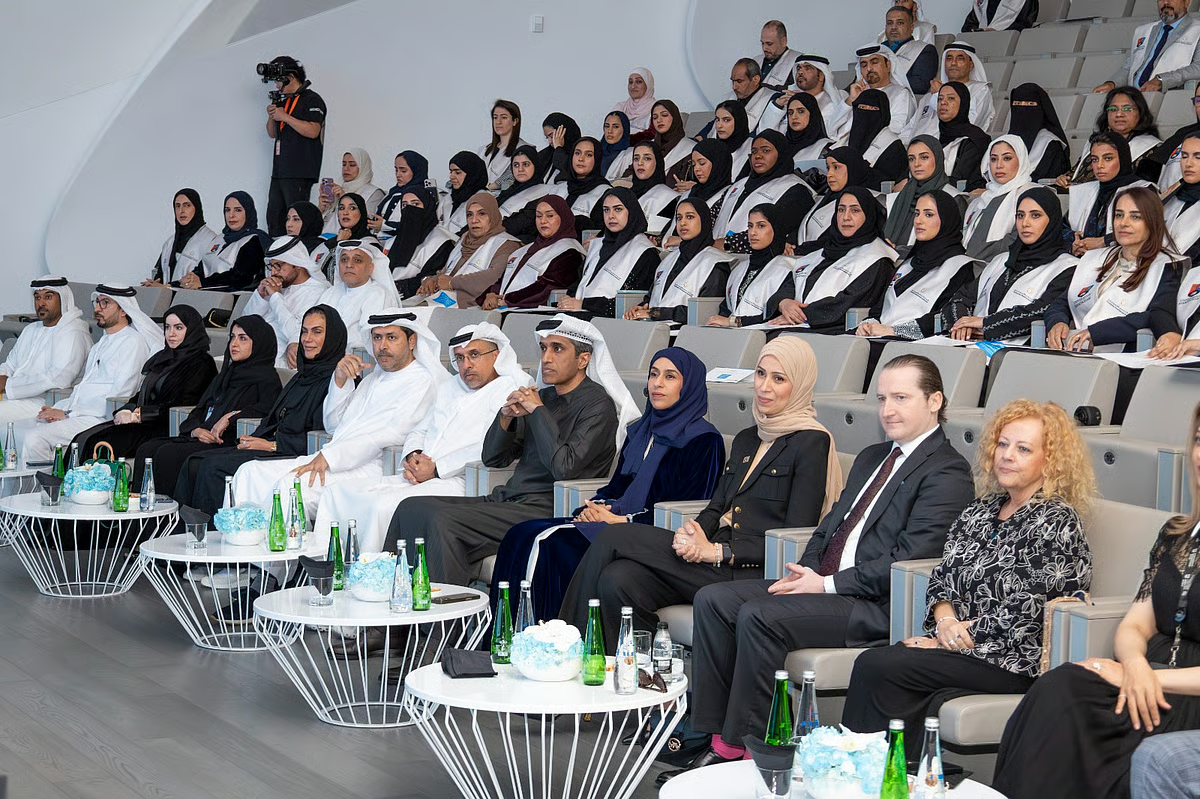

Dubai’s social sector received a boost this week with the graduation of 104 professionals from a specialized program designed to enhance their skills and contribute to more effective community services. The program, a partnership between the University of Birmingham, Dubai and the Community Development Authority (CDA), focused on bridging the gap between academic learning and real-world application in social work. Graduates represent diverse roles within key Dubai government entities.
The graduation ceremony, held recently, brought together leaders from the CDA, The Executive Council, and participating organizations. This initiative highlights a growing emphasis on professional development within Dubai’s social services, aiming to build a more resilient and responsive community support system. The focus on practical skills alongside theoretical understanding is intended to address increasingly complex social challenges.
Strengthening Dubai’s Social Work Capabilities
The program, according to the CDA, wasn’t solely a training exercise; it functioned as a comprehensive platform for bolstering professional capabilities within Dubai’s broader social sector ecosystem. This is particularly important as Dubai continues to expand and its population becomes more diverse, increasing the demand for specialized social services. The CDA has identified a need for highly-trained personnel to effectively address these evolving needs.
Participants included 35 social workers, 32 assistant psychologists, 24 social counsellors, and 13 psychologists. Additionally, the cohort encompassed professionals in specialized areas such as special education, behaviour analysis, and learning support. This diverse representation demonstrates a holistic approach to strengthening community welfare services.
Collaboration as a Cornerstone
A key element of the program’s success, officials noted, was the collaboration between academic institutions and government bodies. The University of Birmingham, Dubai, brought its academic rigor to the curriculum, while the CDA and other entities provided practical insights into local challenges and best practices. This partnership model is likely to be replicated in future initiatives.
Representing a broad spectrum of Dubai’s governance, graduates came from organizations including Dubai Police, the Roads and Transport Authority, Dubai Courts, Dubai Health Authority, the Public Prosecution, the Dubai Foundation for Women and Children, and Erada for Treatment and Rehab. Abdulla Al Basti, Secretary General of The Executive Council, attended the ceremony, emphasizing the significance of such inter-agency cooperation.
This collaborative approach helps ensure that the skills and knowledge imparted through the program are directly relevant to the practical realities faced by social service providers in Dubai. It also facilitates the sharing of expertise and the development of more coordinated responses to community needs. The goal ultimately is to create a more integrated and effective social safety net.
Professor Yusra Mouzughi, Provost of the University of Birmingham, Dubai, expressed pride in the partnership, asserting it reflects a joint dedication to cultivating skilled social professionals. She further underscored its role in preparing individuals for impactful and responsible roles within the community. This relationship demonstrates the university’s commitment to addressing local societal challenges.
The initiative aligns with broader UAE government strategies focused on social development and enhancing the quality of life for all residents. Investments in human capital, particularly within critical sectors like social services, are viewed as essential to achieving long-term sustainability and national priorities. The UAE recognizes the importance of proactive social policies.
One area of continued focus, and potentially future program development, is the integration of technology into social care practices. The use of data analytics, digital platforms, and other technological tools can improve the efficiency and effectiveness of social services. This is an emerging trend within the field globally, and Dubai is beginning to explore its potential. Another related field seeing increasing demand is community support and mental health services.
Following the graduation, participants are expected to implement their newly acquired skills and knowledge within their respective organizations. The CDA indicated it will monitor the impact of the program through ongoing evaluation and feedback mechanisms. Future iterations of the program could refine the curriculum based on this analysis and expand the number of participants.
The long-term impact of this program remains to be seen, as it will depend on the sustained commitment of both the participating organizations and the individuals who have completed it. However, initial reactions are positive, and the collaborative model offers a promising framework for further developing Dubai’s social services infrastructure. Continued investment in the training and development of social workers, psychologists, and related professionals is crucial.
Looking ahead, the CDA is expected to announce further details regarding the expansion of similar programs within the next quarter. Potential areas of focus include specialized training in areas such as child protection, elder care, and family counseling. Analysts will be watching to see how the CDA incorporates feedback from the first cohort and adapts the program to address emerging community needs.